Whether you're starting with the basics of HTML or aiming to build complex, data-driven applications, this roadmap will help you gain the skills needed to become a confident web developer.
Know your track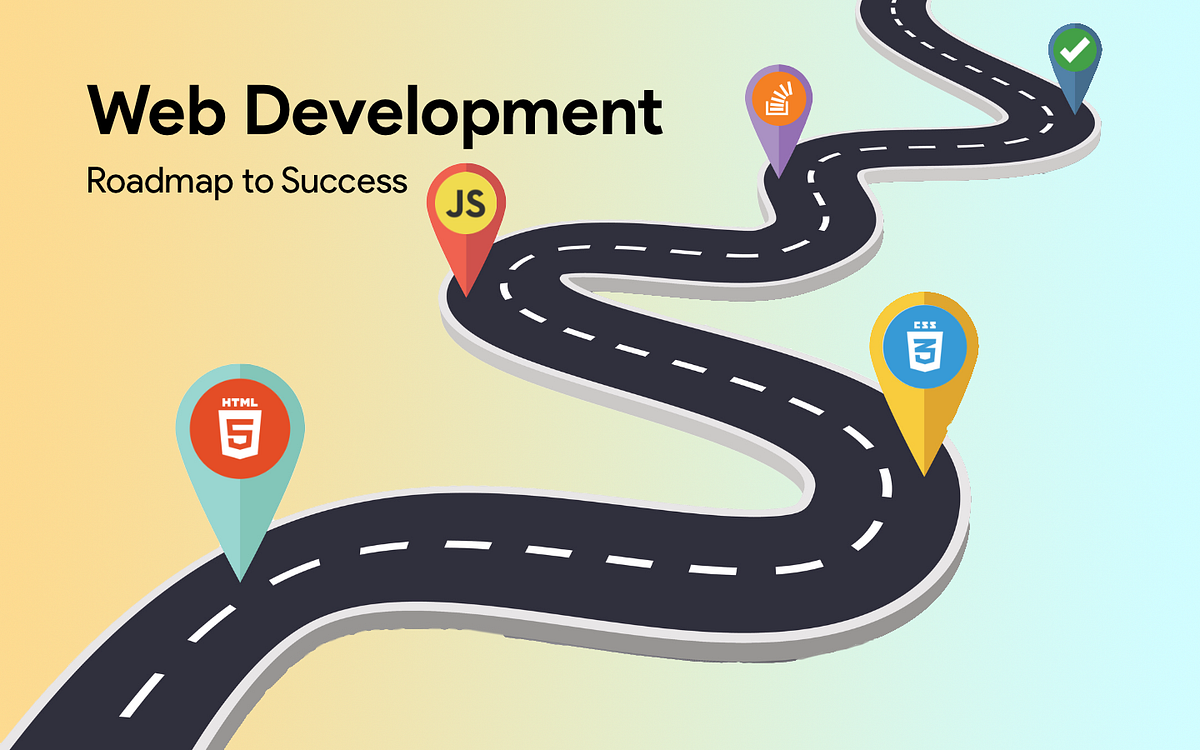
Working Process
Your Web Dev Journey
Here's your guide to explore the essential steps in becoming a web developer.
From learning foundational skills like HTML and CSS to mastering advanced concepts like JavaScript and databases, this roadmap will help you navigate every stage of the process.
ET: 1-2 Weeks
For HTML, start by understanding the basic structure of a webpage and practice using core tags like headings, paragraphs, links, and images. Experiment by building simple web pages and gradually incorporate forms and tables. Finally, explore semantic HTML for better accessibility.
ET: 2-4 Weeks
Start by learning basic styling properties like colors, fonts, and layouts, then move on to responsive design techniques like Flexbox and Grid. Practice by creating visually appealing, responsive web pages.
ET: 8-12 Weeks
Start by mastering the basics of JavaScript (variables, functions, events), then learn how to manipulate the DOM to create interactive user interfaces. Dive into modern frontend frameworks like React, Vue, or Angular to build dynamic web applications.
ET: 8-12 Weeks
Begin with Node.js, learning how to create servers, handle requests, and work with APIs. Use Express.js for routing and middleware, and practice connecting your back-end code to databases (SQL or NoSQL) for full-stack applications.
ET: 8-9 Weeks
To learn databases, start by understanding SQL for relational databases like MySQL or PostgreSQL. Focus on writing
basic queries (SELECT, INSERT, UPDATE, DELETE) and learn how to manage data relationships using joins and foreign
keys.
For MongoDB, dive into NoSQL concepts by exploring document-based storage, querying data with MongoDB's query
language, and understanding how to structure flexible, scalable data models.

Total Approximate Time: 9-10 months
This timeline assumes part-time learning (10-20 hours per week). If you're learning full-time, you could potentially shorten it to 5-7 months.
NOTE: This is just a rough estimate. The timeline can vary depending on your pace, learning style, and available resources. Additionally, practical projects and hands-on practice can help reinforce these skills faster.